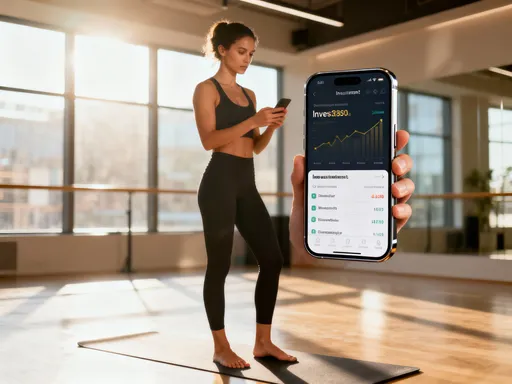
How I Turned My Yoga Classes into a Smarter Investment Game
What if your weekly yoga class wasn’t just about flexibility—but also financial growth? I used to see it as just a personal expense, until I realized the hidden investment potential behind every session. This isn’t about making money from downward dog, but about using wellness spending as a gateway to smarter financial habits. Let me walk you through how rethinking my yoga payments helped me build discipline, spot better tools, and align health with long-term value. At first glance, yoga and investing seem worlds apart—one calms the mind, the other fuels the future. But beneath the surface, they share something powerful: consistency, intention, and the quiet accumulation of progress. By shifting how I viewed my wellness routine, I uncovered a framework that reshaped not only my spending but also my entire approach to financial decision-making. This is the story of how a simple monthly payment became a blueprint for smarter money management.
The Moment I Saw Yoga Differently
For years, attending yoga classes was part of my self-care routine, tucked neatly between grocery shopping and school pickups. It was something I did for stress relief, physical health, and mental clarity. What I didn’t realize at the time was that each $20 class fee was quietly teaching me one of the most valuable financial lessons: the power of regular, intentional action. The shift began when I started tracking my monthly expenses more closely. Like many women juggling family budgets, I wanted to understand where my money was going. When I categorized my yoga payments under “wellness,” I noticed something surprising—the consistency. I was paying the same amount, every month, without fail. Rain or shine, busy week or holiday break, I showed up and so did my payment.
That consistency struck me as familiar—not because of fitness, but because of investing. Regular contributions to a retirement account or brokerage platform work the same way: small, steady inputs that grow over time. I realized I was already practicing a behavior that financial advisors recommend most—consistent commitment. The difference was, I had been applying it only to my body, not my bank account. This realization didn’t come with a dramatic epiphany, but rather a slow dawning: what if treating wellness spending like an investment could train me to treat real investments the same way? Instead of seeing yoga as a cost, I began to see it as a behavioral rehearsal for financial discipline. Each class became less about burning calories and more about building a mindset—one rooted in showing up, staying committed, and valuing long-term results over short-term gratification.
This subtle shift changed how I engaged with money. I stopped asking, “Can I afford this?” and started asking, “What does this habit teach me about my relationship with value?” Was I investing in things that supported both my present well-being and future stability? The answer wasn’t always clear, but the questions themselves marked a turning point. I was no longer just a consumer; I was beginning to think like an investor in my own life.
Why Wellness Spending Can Be a Financial Mirror
Wellness spending—whether on yoga, meditation apps, fitness memberships, or nutrition coaching—acts as a mirror reflecting deeper financial behaviors. These choices are often emotionally driven, tied to self-worth, stress levels, and personal goals. Because they’re not basic necessities like rent or utilities, they reveal how we prioritize discretionary funds. When I examined my yoga spending closely, I saw patterns that mirrored broader financial tendencies: the desire for quality, the fear of missing out, and the struggle between immediate pleasure and long-term benefit. For instance, I once upgraded to a premium studio membership because it included extra classes and a free towel service. On paper, it seemed like a smart bulk purchase. In practice, I rarely used the additional sessions, and the towels were just a minor convenience. I had paid more for perceived value that didn’t translate into real usage.
This experience echoed common investment pitfalls—overpaying for features you don’t need, chasing prestige over performance, or letting emotions override logic. Recognizing this helped me identify emotional spending triggers in other areas. I began to ask whether I was making decisions based on research or impulse, on long-term benefit or short-term comfort. Tracking wellness expenses also revealed my spending rhythm. I tended to pay at the beginning of the month, right after payday, which meant I had more flexibility in my cash flow during that period. That insight led me to align other financial actions—like transferring money to savings or buying fractional shares—with the same timing. By syncing my financial moves with my natural spending cycle, I made better use of my income flow.
Moreover, choosing a yoga studio required a form of due diligence—reading reviews, trying trial classes, assessing instructor credentials. That process wasn’t so different from evaluating a mutual fund or selecting a banking app. Both involve research, comparison, and a judgment call about quality versus cost. The more I applied this analytical lens to wellness spending, the more I saw opportunities to redirect funds toward growth-oriented tools. For example, instead of spending $120 a month on unused studio credits, I could allocate that amount to a low-cost index fund. The return wouldn’t be immediate, but the compounding effect over time would far exceed any unused class pass. Wellness spending, then, became more than a personal choice—it became a diagnostic tool for financial awareness.
From Monthly Fees to Financial Discipline
Paying for yoga classes every month taught me one of the most transferable skills in personal finance: consistency. Unlike sporadic purchases—like a new pair of shoes or a weekend getaway—my yoga payments were predictable, recurring, and non-negotiable. I never considered skipping a payment, even during busy weeks, because I valued the routine. That same reliability became the foundation for building financial discipline. I decided to apply the same principle to saving and investing: if I could commit to yoga, I could commit to my future self.
I started small. On the same day I paid for my yoga membership, I set up an automatic transfer of an equal amount into a high-yield savings account. At first, it felt symbolic—$120 going out, $120 coming in elsewhere. But over time, the habit took root. The act of paying for wellness became a trigger for a parallel financial action. I called it “money move day,” and it soon expanded beyond savings. I began scheduling recurring investments in a diversified ETF, contributing a fixed amount each month regardless of market conditions. This dollar-cost averaging strategy reduced the risk of timing the market poorly and ensured steady participation in long-term growth.
The psychological impact was significant. Just as I associated yoga with self-respect and care, I began to associate investing with responsibility and foresight. There was no instant reward, no visible change in my bank balance, but the consistency built confidence. I wasn’t waiting for motivation—I was relying on structure. This shift was especially powerful for someone managing a household budget, where unexpected expenses often derail plans. By anchoring financial actions to an existing habit, I created a system that required less willpower and delivered more results. Over two years, those monthly transfers grew into a meaningful emergency fund and a growing investment portfolio. The lesson was clear: discipline isn’t about intensity; it’s about repetition. And sometimes, the best way to build it is by piggybacking on habits you already honor.
Spotting the Real Investment Tools Behind the Scenes
As I became more curious about the systems behind my yoga studio’s operations, I noticed something unexpected: the business model itself offered insights into personal finance tools. The studio used a subscription platform that handled recurring billing, membership tiers, and automated reminders. It was seamless, user-friendly, and designed to encourage long-term engagement. I realized that the same technology powering my wellness payments also existed in the financial world—robo-advisors, automated savings apps, and digital budgeting platforms all operate on similar principles. This wasn’t a coincidence. Both industries rely on behavioral design to promote consistency and reduce friction.
That observation led me to explore digital finance tools with fresh eyes. I had previously avoided them, assuming they were too complex or unnecessary for someone with a modest income. But seeing how effectively the yoga studio used automation made me reconsider. I tested a few apps that allowed micro-investing—rounding up everyday purchases and investing the spare change. At first, it felt trivial, like putting pennies into a jar. But within six months, those small amounts added up to over $300, invested in a diversified portfolio. The real value wasn’t in the amount, but in the behavior it reinforced: investing as a passive, ongoing process rather than a one-time decision.
I also discovered budgeting platforms that categorized spending automatically, much like my yoga app tracked class attendance. These tools highlighted patterns I hadn’t noticed—such as how often I paid for services I barely used. That awareness helped me cancel unused subscriptions and redirect those funds toward higher-priority goals. More importantly, these platforms provided visual feedback—charts, progress bars, milestone notifications—that made financial progress feel tangible. Just as I felt accomplished after completing a challenging yoga session, I began to feel a sense of achievement when hitting a savings target or increasing my investment allocation.
The connection between wellness infrastructure and financial technology became undeniable. Both are designed to support long-term engagement through simplicity, feedback, and ease of use. By recognizing this parallel, I stopped seeing finance as a separate, intimidating domain and started viewing it as another area of life that could benefit from smart systems. I didn’t need to become a Wall Street expert—I just needed to adopt tools that worked with my existing habits.
Risk Control: When Passion Projects Meet Practical Money
Not every wellness expense paid off, and one misstep taught me a crucial lesson about risk control. Eager to deepen my practice, I purchased a 50-class package at a discounted rate. The deal seemed irresistible—nearly 30% off per session. But life happened. A family illness, a work deadline, and a minor injury disrupted my routine. By the end of six months, I had used only 18 classes. The remaining credits expired, and the money was gone. At first, I felt guilty and frustrated. I had broken my own rule: never pay for something you can’t commit to using. But instead of dismissing it as a loss, I examined what it revealed about my financial behavior.
This experience mirrored a common investing mistake: emotional decision-making. I had bought the package not because I had a clear plan, but because I wanted to believe I would use it. That optimism, while positive, wasn’t grounded in reality. It was a form of overcommitment driven by good intentions—analogous to putting too much money into a single stock because you love the brand. The lesson was about diversification and sunk cost fallacy. Just as a balanced portfolio spreads risk across asset classes, a balanced spending plan avoids overconcentration in any one area. Once the money was spent, holding onto the guilt wouldn’t recover it. The smarter move was to learn from it and adjust future decisions.
I applied this insight by setting limits on prepayments for discretionary services. Now, I buy smaller packages or opt for pay-as-you-go options unless I’m certain of consistent use. I also started treating unused credits as a signal to reassess my priorities. If I wasn’t following through, maybe the habit wasn’t as essential as I thought. This mindset helped me avoid similar pitfalls in investing—like holding onto underperforming assets out of emotional attachment or chasing high-risk opportunities because they seemed exciting. Risk control isn’t about avoiding mistakes; it’s about building systems that minimize their impact and accelerate learning.
Practical Tricks That Actually Worked for Me
Over time, I developed a set of simple, realistic habits that linked wellness and finance without adding stress. One of the most effective was aligning class costs with micro-investments. For every $20 I spent on a yoga session, I committed to investing $5 into a retirement account. It wasn’t a strict formula, but a symbolic gesture that reinforced balance. The act of pairing consumption with contribution helped me stay mindful of trade-offs. Another technique was using wellness milestones as savings triggers. After completing 30 consecutive classes, I transferred $100 into a long-term fund. These milestones weren’t just about physical progress—they became financial checkpoints, celebrating discipline in both areas.
I also began treating refunds and credits as reinvestment signals. When I received a partial refund for a canceled session, I didn’t spend it on coffee or shopping. Instead, I sent it directly to my investment account. These small amounts, often under $20, added up over time and reinforced the idea that every dollar has purpose. I also adopted a “no double dip” rule: if I skipped a class, I couldn’t replace it with another leisure expense. The saved money had to go toward a financial goal. This rule prevented substitution spending—a common habit where skipping one cost leads to adding another.
Perhaps the most impactful habit was reviewing my wellness spending quarterly. During these reviews, I assessed not just cost, but usage and value. Was I still enjoying the classes? Was the studio convenient? Were there cheaper alternatives with similar quality? This practice mirrored portfolio rebalancing—periodic evaluation to ensure alignment with current needs and goals. If something wasn’t serving me, I adjusted. These routines didn’t require extra time or expertise. They worked because they were integrated into a life already full of responsibilities. The key was consistency, not complexity.
Building a Life Where Health and Wealth Grow Together
True financial health isn’t measured solely by account balances or investment returns. It’s reflected in sustainability—the ability to care for yourself today while preparing for tomorrow. By integrating wellness habits with financial routines, I built a system where taking care of my body also meant taking care of my future. This isn’t about achieving perfection or promising overnight wealth. It’s about making small, mindful choices that compound over time. The yoga mat didn’t make me rich, but the discipline it fostered did help me grow wealthier in mindset and action.
The journey taught me that financial wisdom often comes from unexpected places. A simple monthly payment became a teacher of consistency, a subscription model revealed the power of automation, and a missed class highlighted the importance of risk control. These lessons weren’t learned in a seminar or from a financial guru—they emerged from daily life, observed with intention. For women managing households, budgets, and personal well-being, this approach feels both accessible and empowering. It doesn’t require a high income or advanced knowledge—just awareness, patience, and a willingness to see value in the routines you already keep.
Today, I no longer separate self-care from financial care. They are two threads woven into the same fabric of a balanced life. When I roll out my mat, I’m not just stretching my muscles—I’m honoring a commitment to myself, one that extends beyond the studio and into my financial future. The habits that support physical resilience also support economic resilience. And in a world full of noise and pressure, that kind of quiet, steady progress may be the most valuable investment of all.