Beyond the Beach: Cancun’s Wild Side You’ve Never Seen
You know Cancun, right? Sun, sand, and all-inclusive resorts — classic. But what if I told you there’s another side to this Mexican hotspot? Hidden behind the tourist strips are breathtaking natural wonders: lush jungles, crystal-clear cenotes, and protected reserves teeming with wildlife. I’m talking kayak rides through mangroves, snorkeling in underground rivers, and walking trails where howler monkeys call from the trees. This isn’t just a beach escape — it’s a full-on nature adventure. Let me show you the Cancun most travelers miss.
Reimagining Cancun: More Than Just a Party Destination
Cancun is often painted as a neon-lit party capital, famous for spring break revelry and endless rows of high-rise hotels. While the Hotel Zone delivers on sunbathing and seaside cocktails, it represents only a fraction of what this region offers. Beyond the postcard-perfect beaches lies a surprisingly diverse landscape shaped by ancient geology and tropical ecosystems. From coastal dunes that buffer the mainland from storms to dense mangrove forests and inland jungle corridors, Cancun’s natural terrain is as rich as it is resilient.
This duality — urban development alongside untouched wilderness — makes Cancun a fascinating case study in sustainable tourism. The city was master-planned in the 1970s to boost Mexico’s tourism economy, but its location was no accident. Nestled on a narrow strip of land between the Caribbean Sea and the Nichupté Lagoon, it sits at the crossroads of marine and terrestrial ecosystems. Today, responsible travelers are discovering that the true magic of Cancun isn’t confined to poolside loungers — it’s found where the pavement ends and the wild begins.
The coexistence of tourism and nature is not only possible — it’s essential. As visitor numbers rise, so does the pressure on local habitats. Yet, with thoughtful planning and growing awareness, Cancun has become a model for balancing access with preservation. Protected areas like the Nichupté Wetland Sanctuary and the broader Yum Balam Flora and Fauna Protection Area serve as vital refuges for native species while offering educational and recreational opportunities. These spaces remind us that tourism doesn’t have to mean degradation — it can inspire stewardship.
For families, couples, and solo explorers alike, reimagining Cancun means shifting expectations. Instead of measuring a vacation by the number of drinks served, consider measuring it by moments of wonder: the first glimpse of a toucan in flight, the cool hush of an underground cave, the ripple of water as a crocodile slips silently beneath the surface. These experiences don’t require luxury price tags — they require curiosity, respect, and a willingness to step off the beaten path.
The Magic of the Cenotes: Nature’s Underground Wonderland
One of the most extraordinary natural features of the Yucatán Peninsula is the cenote — a freshwater sinkhole formed over thousands of years by the collapse of limestone bedrock. These geological marvels are more than scenic swimming holes; they are sacred portals to an underground world of rivers, caves, and ecosystems found nowhere else on Earth. For the ancient Maya, cenotes were considered gateways to the underworld, sources of life and spiritual significance. Today, they remain vital water sources and treasured destinations for those seeking connection with nature.
Swimming or snorkeling in a cenote is an experience unlike any other. The water is typically cool, clear, and remarkably still, allowing visibility that can stretch over 100 feet in well-preserved sites. Sunlight filters through openings in the cave ceiling, casting shimmering patterns on the walls and illuminating dangling roots and stalactites. Some cenotes, like the open-air Cenote Ik Kil near Valladolid, offer dramatic vertical drops and cascading vines, while others, such as Cenote Azul or Grand Cenote, feature walk-in access and shallow areas perfect for children and less confident swimmers.
Among the most accessible yet authentic cenotes within day-trip distance from Cancun is Grand Cenote, located just off the road to Tulum. Surrounded by jungle and partially shaded by a natural canopy, it offers both shallow platforms for wading and deeper zones for snorkeling. Visitors often spot small fish darting through submerged roots, and with quiet observation, even the occasional freshwater turtle. The site is well-maintained, with changing facilities and life jackets available, making it ideal for families.
Equally impressive is Cenote Samulá, near the colonial town of Valladolid. Its partially collapsed roof creates a cathedral-like atmosphere, with beams of light piercing through cracks in the stone and illuminating ancient rock formations. Because access is limited and the environment is fragile, visitors are required to follow guidelines: no soap or chemical lotions, no loud noises, and no flash photography to avoid disturbing the delicate balance. These rules aren’t arbitrary — they reflect a growing commitment to conservation across the region.
The cultural importance of cenotes cannot be overstated. Archaeological evidence shows that the Maya used them for ritual offerings, including ceramics, jewelry, and even human remains, underscoring their spiritual role. Modern visitors are encouraged to honor this legacy by treating cenotes with reverence. Many local tour operators now partner with conservation groups to fund water quality testing and reforestation efforts around cenote sites, ensuring these wonders remain pristine for future generations.
Sian Ka’an Biosphere Reserve: A Hidden Jungle Paradise
Just south of Tulum lies one of Mexico’s most ecologically significant protected areas: the Sian Ka’an Biosphere Reserve. Spanning over 1.3 million acres, this UNESCO World Heritage site protects a mosaic of ecosystems, including tropical forests, mangroves, lagoons, and part of the Mesoamerican Barrier Reef — the second-largest coral reef system in the world. While not within Cancun’s immediate vicinity, it is easily reachable on a guided day trip, making it an essential destination for nature-focused travelers.
Sian Ka’an, which means “Gate of Heaven” in Mayan, lives up to its name. The reserve is home to more than 300 bird species, 100 mammal species, and countless reptiles, amphibians, and marine creatures. Jaguars, pumas, and ocelots roam its remote interior, though sightings are rare due to their elusive nature. More commonly seen are white-tailed deer, coatimundis, and howler monkeys whose morning calls echo through the canopy. Along the coast, manatees glide through seagrass beds, and sea turtles nest on quiet beaches during the summer months.
Visitors typically explore Sian Ka’an through authorized eco-tours, which are required for entry. These guided excursions ensure minimal environmental impact while maximizing educational value. A standard tour might begin with a boat ride through the reserve’s intricate network of channels, where guides point out nesting herons, crocodiles basking on muddy banks, and schools of tarpon leaping from the water. The silence is profound — no motorized traffic, no crowds, just the gentle lap of water and the rustle of leaves.
Some tours include short hikes along raised boardwalks or natural trails, offering a closer look at the region’s plant life, including rare orchids and towering ceiba trees. Others combine reef snorkeling with lagoon exploration, allowing guests to experience both freshwater and saltwater environments in a single day. Regardless of the itinerary, all visitors must obtain permits in advance and adhere to strict rules: no littering, no feeding wildlife, and no removal of natural materials such as shells or plants.
The success of Sian Ka’an lies in its integrated approach to conservation and community involvement. Local Maya cooperatives run many of the eco-tours, providing sustainable livelihoods while preserving traditional ecological knowledge. This model demonstrates that environmental protection and economic development can go hand in hand. For travelers, participating in these tours is not just recreation — it’s a way to contribute directly to conservation efforts and support indigenous stewardship of the land.
Isla Contoy: A Pristine Escape for Nature Lovers
For those seeking solitude and unspoiled beauty, Isla Contoy offers a rare opportunity. Located about 30 miles north of Isla Mujeres and accessible only by authorized boat, this slender island is a federally protected national park and one of Mexico’s most important bird sanctuaries. With a daily visitor cap of 200 people and no permanent accommodations or commercial infrastructure, Isla Contoy remains a sanctuary where nature reigns undisturbed.
The island spans just five miles in length but hosts over 150 bird species, including frigatebirds, pelicans, herons, and the endangered roseate spoonbill. During migration seasons, it becomes a critical stopover for thousands of birds traveling between North and South America. The surrounding waters are equally rich, with healthy coral reefs and seagrass meadows supporting rays, nurse sharks, and colorful reef fish. Snorkeling here feels like swimming in an aquarium — vibrant, teeming, and untouched.
Access to Isla Contoy is tightly regulated. All visitors must book through licensed tour operators in Cancun or Isla Mujeres and participate in mandatory guided tours. Upon arrival, guests are given a brief environmental orientation that outlines the rules: stay on marked paths, keep voices low, do not touch coral or marine life, and carry out all trash. These measures are not suggestions — they are enforced to protect the island’s fragile ecosystem.
A typical day on Isla Contoy includes a guided nature walk along the island’s central trail, a snorkeling session on the windward reef, and a buffet lunch served in a designated eco-friendly pavilion. Because supplies must be brought from the mainland, operators encourage guests to bring reusable water bottles and minimize single-use plastics. The absence of shops, restaurants, or loud music creates a meditative atmosphere — a stark contrast to the bustling resorts of the mainland.
For mothers traveling with children, Isla Contoy offers a unique educational experience. Kids can learn about bird migration, coral reef ecology, and the importance of conservation in a hands-on, immersive way. Many tour guides are trained naturalists who engage young visitors with stories and interactive observations. It’s a chance to foster a lifelong appreciation for nature — not through screens or textbooks, but through direct experience.
Kayaking Through Mangroves: Exploring Cancun’s Coastal Veins
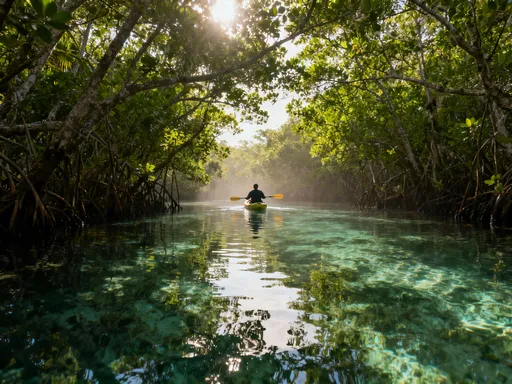
One of the most peaceful and ecologically rewarding ways to experience Cancun’s natural side is by kayak. Paddling through the quiet waterways of the Nichupté Lagoon or along the coast near Puerto Morelos allows travelers to glide through mangrove forests — dense tangles of salt-tolerant trees whose intricate root systems form nurseries for fish, crustaceans, and other marine life. These forests are often called the “lungs of the coast” for their role in filtering pollutants, stabilizing shorelines, and sequestering carbon.
Kayak tours typically last between two and four hours and are suitable for all ages and skill levels. Guided excursions depart from eco-parks such as Croco Cun Zoo & Eco Park or smaller local outfitters in Puerto Morelos. As paddlers move silently through narrow channels, guides point out wildlife: basilisk lizards perched on branches, blue crabs scuttling across roots, and the occasional crocodile sunning itself on a muddy bank. The experience is serene — a world away from the noise and congestion of the Hotel Zone.
Mangroves are more than scenic backdrops — they are critical to the health of the entire coastal ecosystem. Their roots provide shelter for juvenile fish, including species vital to local fisheries. They also act as natural barriers against storm surges and erosion, protecting inland communities during hurricanes. Despite their importance, mangroves worldwide face threats from coastal development, pollution, and climate change. In Cancun, conservation groups are working to restore degraded areas and raise public awareness through eco-tourism.
Reputable eco-tour operators follow strict sustainability practices: limiting group sizes, using biodegradable sunscreen recommendations, and educating guests about local ecology. Some tours include a stop at a small island or sandbar for a swim or snack, always ensuring that no trace is left behind. For families, these outings offer a gentle introduction to environmental stewardship — a way to enjoy nature without harming it.
Flora and Fauna Encounters: Who Lives in Cancun’s Wild Spaces?
The biodiversity of the Cancun region is both astonishing and humbling. From the forest floor to the coral reefs, life thrives in astonishing variety. On land, white-tailed deer move silently through the underbrush, while spider monkeys and howler monkeys swing through the canopy. The latter, known for their thunderous morning calls, are often heard before they’re seen. Birdwatchers will delight in spotting keel-billed toucans, great curassows, and the vividly colored turquoise-browed motmot.
Along the coast, American crocodiles inhabit brackish lagoons and mangrove channels. Though they may seem intimidating, they are generally shy and avoid humans. Responsible tour guides maintain safe distances and emphasize the importance of not feeding or approaching wildlife. In the waters, rays, tarpon, and reef sharks are common sights for snorkelers and divers. Seasonally, between May and October, several species of sea turtles — including loggerheads, greens, and leatherbacks — come ashore at night to nest on quiet beaches. Conservation programs monitor these sites, protecting nests from predators and poachers.
Ethical wildlife viewing is crucial. Travelers should maintain a respectful distance, avoid flash photography (which can disorient animals), and never attempt to touch or feed wild creatures. Feeding alters natural behaviors and can lead to dependency or aggression. Even seemingly harmless actions, like tossing bread to birds, can disrupt ecosystems. Instead, observation with minimal impact allows animals to thrive in their natural state.
Visitors can support conservation by choosing tours affiliated with environmental organizations, donating to local rescue centers like Crococun Zoo (which rehabilitates crocodiles and other native species), or participating in beach cleanups. Many eco-parks also offer educational programs that explain the region’s ecological challenges and solutions. By engaging with these initiatives, travelers become part of the protection effort rather than passive observers.
How to Plan a Nature-Focused Trip to Cancun
Planning a nature-centered vacation in Cancun is easier than many assume. With a bit of research and intention, travelers can design a fulfilling itinerary that balances exploration with responsibility. A suggested three-day eco-itinerary might begin with a cenote visit on day one — perhaps Grand Cenote or Cenote Ik Kil — followed by a late afternoon kayak tour through the Nichupté Lagoon. Day two could be dedicated to Sian Ka’an, with an early departure from Cancun for a full-day guided tour including boat rides, hiking, and snorkeling. On day three, a trip to Isla Contoy offers a serene finale, combining birdwatching, reef snorkeling, and quiet reflection.
Transportation options vary. Renting a car provides flexibility, especially for visiting cenotes and coastal towns like Puerto Morelos. However, joining organized eco-tours ensures access to protected areas that restrict independent entry, such as Sian Ka’an and Isla Contoy. Many reputable operators offer hotel pickups and bilingual guides, making the experience accessible even for those unfamiliar with the region. Local shuttle services and colectivos (shared vans) are budget-friendly alternatives for reaching nearby eco-parks.
Packing wisely enhances both comfort and sustainability. Reef-safe sunscreen is non-negotiable — chemical sunscreens containing oxybenzone and octinoxate harm coral and are banned in many areas. Reusable water bottles, lightweight hiking shoes, a wide-brimmed hat, and a quick-dry towel are practical additions. A small backpack for carrying supplies during day trips helps minimize waste. Families may want to include binoculars, field guides, or waterproof notebooks for children to record their observations.
Timing matters. Visiting attractions early in the morning not only avoids crowds but also increases the chances of wildlife sightings, as many animals are most active at dawn. Checking weather forecasts and seasonal conditions — such as hurricane season (June to November) or turtle nesting periods — helps ensure a safe and rewarding trip. Respecting opening hours and tour schedules supports local operations and reduces environmental strain.
Ultimately, a nature-focused visit to Cancun is about intention. It’s choosing to look beyond the resort walls, to listen to the jungle, to move quietly through fragile ecosystems. It’s understanding that every footstep, every choice, has an impact — and choosing to leave only footprints.
Cancun doesn’t have to mean crowds and concrete. Beyond the hotels lies a vibrant, living landscape — one worth exploring with care and curiosity. By choosing nature-based experiences, travelers not only discover the region’s true beauty but also help protect it. So next time you plan a tropical getaway, ask yourself: do I want just a tan — or a real adventure? The wild side of Cancun is waiting.