Lost in the Light: How Málaga’s Cityscape Stole My Soul
Walking through Málaga feels like stepping into a living painting—sun-drenched walls, golden light spilling over cobblestones, and the hum of life echoing from ancient plazas to sleek waterfront promenades. I didn’t just visit the city; I felt it. From hidden alleyways pulsing with street art to panoramic rooftop views that stretch to the Mediterranean, Málaga’s cityscape is a sensory journey. This is not just sightseeing—it’s immersion. The way the city layers history, culture, and modern vitality into every corner creates an experience that resonates long after departure. In an age where destinations often blur together, Málaga stands apart—not because it shouts the loudest, but because it speaks in whispers of light, texture, and time.
First Impressions: Arriving in Málaga – Where History Meets Horizon
Arriving in Málaga by air offers a first glimpse of its striking geography—the city cradled between the rugged embrace of the Sierra de Málaga mountains and the endless shimmer of the Mediterranean Sea. As the plane descends, passengers see how urban development unfolds in gentle waves from the coastline inward, with clusters of whitewashed buildings cascading down hillsides like scattered limestone. The contrast is immediate: modern infrastructure meets timeless terrain. The airport, efficient and well-connected, serves as a quiet gateway, linking travelers seamlessly to the city via bus, taxi, or rental car. Within minutes, the outskirts reveal a blend of contemporary housing and traditional Andalusian architecture, setting the tone for what lies ahead—a place where past and present coexist without conflict.
Entering the city center, the urban layout begins to tell its story. Unlike sprawling metropolises that overwhelm upon arrival, Málaga unfolds gradually, inviting exploration rather than demanding navigation. Wide boulevards give way to narrower lanes, each turn revealing new textures—peeling stucco walls bathed in afternoon light, bougainvillea spilling over wrought-iron balconies, the occasional bell tower rising above the rooftops. This deliberate pacing of discovery is no accident; it reflects a centuries-old approach to urban design rooted in walkability and human scale. The city does not impose itself—it allows visitors to step into its rhythm at their own pace, making the experience feel personal and intimate even in broad daylight.
What distinguishes Málaga’s first impression is not just its beauty, but its authenticity. There are no artificial facades built solely for tourism; instead, daily life continues unscripted along the same streets admired by visitors. Children walk home from school, shopkeepers sweep their doorsteps, and neighbors exchange greetings in plazas shaded by palm trees. This seamless integration of resident and visitor spaces contributes to a rare quality in today’s travel landscape: a destination that feels lived-in, not performed. The city welcomes observation, but it does not perform for the camera—it simply exists, radiant in its ordinary moments.
The Heartbeat of the Old Town: Wandering Through La Ciudad Histórica
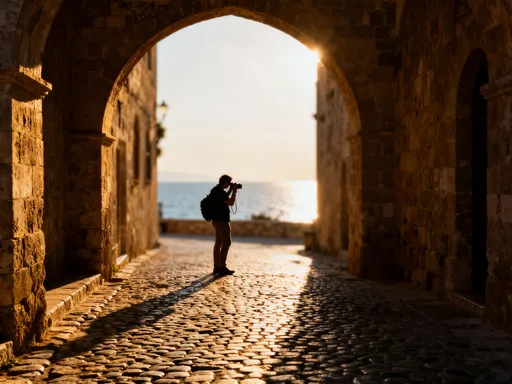
At the core of Málaga lies its historic heart—La Ciudad Histórica—one of the largest old towns in Spain, where layers of civilization are embedded in every stone and street corner. Walking through this district is akin to flipping through the pages of a well-worn history book, each chapter marked by a different era. Roman foundations support later Moorish walls, which in turn gave way to Christian reconstructions, all woven together in a dense tapestry of architectural evolution. The streets, intentionally narrow to provide shade in the Andalusian heat, twist and turn unpredictably, encouraging slow, attentive movement. This is not a place to rush through; it is meant to be felt, one step at a time.
Two landmarks stand as pillars of this historical narrative: the Alcazaba fortress and the Roman Theatre. The Alcazaba, constructed in the 11th century during the Caliphate period, rises gracefully on a hillside, its red-tiled ramparts blending into the natural slope. Within its walls, geometric tilework, arched corridors, and lush gardens reflect the sophistication of Islamic design, while panoramic views over the city remind visitors of its strategic importance. Just below, the Roman Theatre—dating back to the 1st century BCE—was rediscovered in the 20th century after centuries of burial beneath urban development. Today, it stands partially restored, nestled beside the later-built Alcazaba, creating a powerful visual dialogue between empires separated by centuries yet occupying the same sacred ground.
What makes the old town truly exceptional is how these monumental sites are not isolated attractions but integrated into the daily life of the neighborhood. Residents pass by the Roman Theatre on their way to market; children play near the Alcazaba’s outer walls; cafes spill onto plazas adjacent to ancient ruins. This integration fosters a deep sense of continuity—history is not locked behind glass but lived alongside. Walking becomes the most essential tool for understanding Málaga, not only because the terrain demands it, but because movement on foot allows travelers to notice subtle details: a carved stone inscription, a hidden courtyard, the scent of jasmine drifting from a private garden. In this way, the city reveals itself slowly, rewarding patience with intimacy.
Urban Art & Hidden Corners: Discovering Málaga’s Street Soul
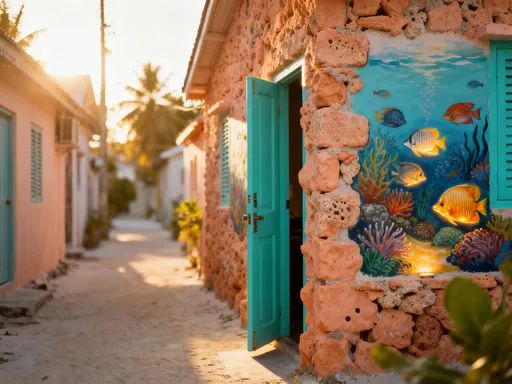
Beyond the postcard-perfect façades of the historic center lies another dimension of Málaga—one defined by color, expression, and grassroots creativity. Neighborhoods like Soho and La Trinidad have emerged as vibrant hubs of urban art, where once-overlooked streets now pulse with life thanks to an explosion of murals and community-led revitalization. These areas were not born from top-down urban planning but from a groundswell of local pride and artistic energy, transforming neglected corners into open-air galleries. The shift began in earnest with the opening of the CAC Málaga (Centro de Arte Contemporáneo) in 2003, a bold architectural statement that anchored contemporary culture in a traditionally conservative city.
The influence of CAC Málaga extended far beyond its walls. Inspired by its presence, international and local artists began using blank building surfaces as canvases, turning entire blocks into immersive visual experiences. Today, walking through Soho feels like navigating a living museum—every alley offers a new composition, from hyper-realistic portraits to abstract interpretations of Andalusian identity. One mural might depict a fisherman’s daughter gazing toward the sea, her eyes reflecting both memory and hope; another could reinterpret flamenco through swirling patterns of motion and fire. These works do more than beautify—they narrate, challenge, and celebrate, turning public space into a forum for cultural conversation.
For travelers seeking authentic engagement, a self-guided art walk through these neighborhoods offers a refreshing alternative to conventional sightseeing. Maps available online or at tourist centers outline key pieces, but the best discoveries often come from wandering without direction. It’s important, however, to approach these spaces with respect. These are not tourist zones created for consumption—they are residential areas where families live, children play, and elders sit outside their homes in the evening breeze. Keeping noise levels low, avoiding blocking doorways for photos, and supporting local businesses by stopping at family-run tapas bars contribute to responsible interaction. In doing so, visitors become part of the neighborhood’s story rather than mere observers.
Skyline Stories: Rooftop Views That Define the City
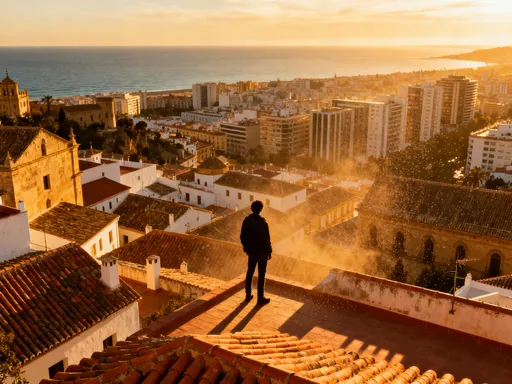
To understand Málaga’s soul, one must see it from above. The city’s hilly topography creates a natural stage for elevation, offering vantage points that transform the urban landscape into a living mosaic. Rooftop perspectives do more than provide scenic rewards—they offer emotional clarity, a moment of stillness amid the bustle below. Whether perched on a café terrace, standing at a public viewpoint, or exploring a museum’s upper floor, the act of looking down on Málaga shifts perception. The city breathes: laundry flaps on balconies, cats dart between rooftops, the distant hum of conversation rises like music. From this height, the chaos of street level resolves into harmony.
Among the most accessible elevated views is the upper level of the Atarazanas Market, a 19th-century structure that once served as shipyards and now houses one of the city’s most vibrant food markets. Climb the outer staircase or find a seat at one of the rooftop bars nearby, and the scene unfolds—a sea of terracotta tiles stretching toward the harbor, interrupted only by church spires and palm trees. Another powerful viewpoint lies near the Cathedral of the Incarnation, where narrow staircases lead to small plazas with unobstructed sightlines over the old town. Here, the contrast between ancient and modern is most vivid: centuries-old rooftops meet sleek glass additions, all bathed in the same golden light.
For a more local experience, the Huelin district offers understated terraces and quiet stairwells that lead to hidden lookouts. Less frequented by tourists, these spots allow for uninterrupted contemplation. Timing enhances the experience—arriving during golden hour, when the sun dips low over the Mediterranean, bathes the city in a warm, honeyed glow. Sunset transforms Málaga into a city of fire and shadow, where every surface seems to radiate light. The emotional impact is profound: a sense of awe, yes, but also belonging. From above, the city feels both vast and intimate, a collection of individual lives forming a greater whole. These moments—quiet, elevated, illuminated—are not just photo opportunities; they are invitations to reflect.
The Waterfront Pulse: From Port to Promenade – Málaga’s Modern Face
Along the southern edge of the city, Málaga’s relationship with the sea takes on a new form—one of renewal and connection. Once dominated by industrial activity, the port has undergone a remarkable transformation, evolving into a dynamic waterfront promenade that blends leisure, commerce, and culture. At the heart of this change is Muelle Uno, a modern extension of the marina that serves as a hub for dining, shopping, and public art. Wide pedestrian walkways invite strollers of all ages, while yachts bob beside traditional fishing boats, symbolizing the city’s ability to honor its maritime roots while embracing contemporary life.
Muelle Uno is more than a commercial space—it is a social space. Restaurants with outdoor seating offer views of the water, serving everything from fresh seafood to international cuisine. Children chase pigeons near sculptures, couples pause for photos against the backdrop of the setting sun, and joggers weave through the evening crowd. Public art installations, including large-scale metal figures and interactive pieces, add a creative dimension, ensuring that aesthetics remain central even in modern development. The area is meticulously designed for accessibility, with ramps, tactile paving, and ample seating, making it welcoming for families, older adults, and visitors with mobility challenges.
What makes the waterfront particularly compelling is its balance. Unlike some redeveloped ports that erase their past, Málaga has preserved elements of its working harbor. Fishermen still unload their daily catch at nearby docks, and the scent of salt and seaweed lingers in the air. This coexistence—between luxury and labor, tradition and innovation—gives the area authenticity. It does not feel like a theme park version of a coastal city; it feels real. For travelers, the waterfront offers a space to unwind after exploring the historic center, to feel the breeze off the water, and to witness how a city can modernize without losing its soul.
Living Like a Local: Neighborhood Vibes Beyond the Tourist Map
While the old town and waterfront draw the majority of visitors, Málaga’s true character flourishes in its residential neighborhoods—areas like Churriana, El Palo, and Ciudad Jardín, where life unfolds at a gentler pace. These districts, often overlooked by guidebooks, offer a window into everyday Andalusian living. Churriana, located west of the city center, retains a village-like atmosphere with its flower-filled plazas, tile-roofed homes, and shaded avenues lined with orange trees. A local market buzzes each morning, where residents select ripe tomatoes, fragrant herbs, and freshly baked bread, exchanging news as they shop.
El Palo, stretching along the coast east of the airport, presents a different rhythm—one shaped by the sea. This working-class neighborhood is known for its long beachfront promenade, where locals walk, cycle, or practice tai chi at sunrise. Families gather on weekends at neighborhood chiringuitos (beach bars), sharing plates of fried fish and glasses of tinto de verano. Architecture here is modest but charming, with pastel-colored buildings and communal courtyards. Unlike the polished beaches of tourist resorts, El Palo’s shore feels unpretentious and lived-in, a place where relaxation is not sold but practiced.
Visiting these areas requires a shift in mindset—from sightseeing to observing. There are no entry fees, no guided tours, no souvenir stands. Instead, engagement comes through small gestures: shopping at a neighborhood bakery, sitting in a plaza with a coffee, or simply walking with respect. Travelers who take the time to explore beyond the center often find deeper connections, not only to the city but to its people. These neighborhoods remind us that Málaga is not just a destination but a home—to thousands of residents whose lives give the city its enduring warmth and character.
Why Málaga’s Cityscape Matters – A Model of Balanced Urban Identity
Málaga’s enduring appeal lies in its ability to evolve without erasing. In an era when many Mediterranean cities face the pressures of over-tourism, homogenization, or rapid development at the cost of heritage, Málaga offers a compelling alternative. It has expanded and modernized—building new cultural institutions, revitalizing neglected areas, improving infrastructure—yet it has done so with a commitment to scale, authenticity, and human experience. The city does not prioritize grand gestures over daily life; instead, it integrates progress into the fabric of the existing urban landscape. This balance is rare and worth studying, not only for travelers but for urban planners and communities worldwide.
Compared to other coastal cities that have sacrificed character for convenience, Málaga stands out for its restraint. There are no skyscrapers disrupting the skyline, no shopping malls replacing historic markets. Growth has been thoughtful, often community-driven, and sensitive to the city’s visual and cultural identity. The result is a destination that feels both modern and rooted, dynamic yet peaceful. This equilibrium supports sustainable tourism—visitors are drawn not by spectacle alone, but by the quality of experience: the chance to wander without crowds, to discover art in unexpected places, to sit in a plaza and feel part of something real.
Ultimately, Málaga teaches us that cities are not static backdrops for human activity—they are living entities, shaped by time, memory, and collective care. To explore such a place mindfully is to honor its past, respect its present, and support its future. The light that steals the soul is not just the Andalusian sun; it is the glow of a city that knows who it is. In choosing to walk its streets with attention and humility, travelers do more than see a destination—they participate in its ongoing story.