Lost in the Pulse of Caracas: A Wanderer’s True Playground
You know that feeling when a city just grabs you? Caracas didn’t just welcome me—it pulled me into its rhythm. From hiking misty trails above the skyline to stumbling upon street art that screamed soul, every moment felt raw and real. This isn’t your average tourist checklist; it’s about wandering with purpose and finding magic in the unexpected. Let me take you through the heartbeat of Venezuela’s capital, where life unfolds in vibrant layers, and every corner hums with energy. More than a destination, Caracas is an invitation—to listen, to move, to feel alive.
Arrival with No Plan: Embracing the Chaos
Stepping off the plane into the warm, thick air of Caracas is like being wrapped in a living blanket. The city greets you not with silence, but with a symphony of honking horns, distant music, and the murmur of rapid-fire Spanish conversations spilling from open windows. There’s no gentle easing in—Caracas begins at full volume. I had no itinerary, no strict schedule, only a backpack and a willingness to follow where the city led. That openness became my greatest tool. Within hours, I found myself sharing a plastic stool at a sidewalk café in El Hatillo, sipping sweet coffee with a retired teacher named Luisa who insisted I try her favorite empanada from a nearby vendor. These unplanned encounters, sparked by curiosity and a smile, became the foundation of my journey.
Many travelers hesitate at the idea of visiting Caracas, and it’s true—awareness matters. The city has faced economic and social challenges, and safety is a legitimate concern for visitors. But letting fear dictate your experience can mean missing the warmth that defines daily life here. Staying alert—avoiding isolated areas after dark, keeping valuables out of sight, and traveling with local insight—goes a long way. I quickly learned to move with confidence but not carelessness, to engage without naivety. The key was not to see danger at every turn, but to respect the rhythm of the streets. When I did, the city opened up in ways I hadn’t imagined.
Wandering without a map led me through bustling plazas, past fruit vendors balancing towering pyramids of mangoes and papayas, and into lively markets where laughter echoed louder than prices were haggled. In one moment, I was lost near Plaza Venezuela, unsure of my direction. In the next, a university student named Javier offered to walk me to my hostel, sharing stories about student life and his dreams of studying architecture abroad. That small act of kindness, repeated in different forms throughout my stay, reminded me that humanity often shines brightest in places others overlook. Caracas taught me that sometimes, the most valuable travel plans are the ones you never made.
Above the City: Hiking El Ávila’s Hidden Trails
One morning, seeking relief from the city’s pulse, I took a shared taxi to the edge of Waraira Repano National Park, better known as El Ávila. This mountain range looms over Caracas like a green guardian, its peaks often hidden in morning mist. I hadn’t booked a guide, but within minutes of arriving at the Maripérez entrance, I met Carlos, a local hiker who offered to show me a lesser-known trail. He had grown up in the foothills and knew the paths like the lines on his palms. Within an hour, we were climbing through dense cloud forest, where the air cooled and the city’s noise faded into a distant hum.
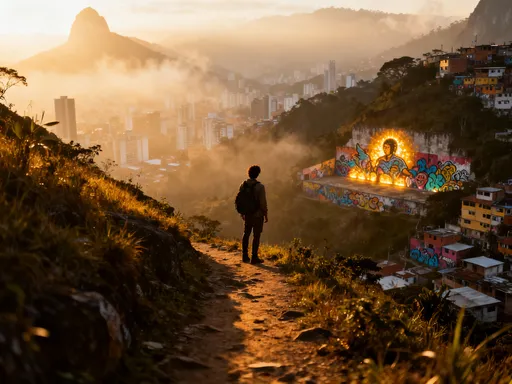
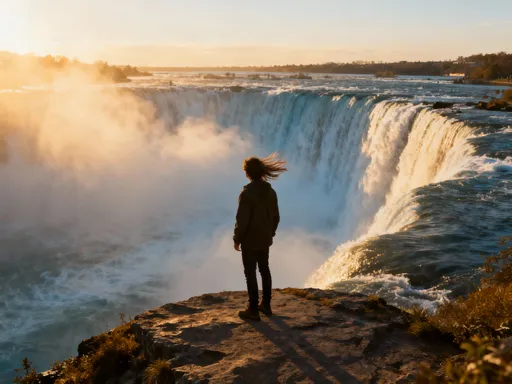
The contrast was breathtaking. Below us, Caracas sprawled in a chaotic mosaic of concrete and color. Above, El Ávila offered serenity—ferns unfurling in the damp shade, birds calling from unseen branches, and the occasional glimpse of a swift-moving lizard darting across mossy rocks. We followed a narrow path that switchbacked through the forest, emerging at a rocky outcrop with a panoramic view of the valley. The city looked different from this height—not as a place of stress, but as a living organism, breathing and shifting with the day’s light.
Carlos explained how El Ávila is more than a park—it’s a sanctuary for Caraqueños, a place to escape, reflect, and reconnect. Families come on weekends to picnic, runners train on the trails, and couples hike to quiet spots to talk or simply sit in silence. The park is free to enter, though donations help maintain the trails, and opening hours typically begin at dawn. I learned that mornings are ideal—not only for cooler temperatures but also for catching the city as it wakes, the sunrise painting the sky in soft pinks and golds before the heat sets in.
For anyone considering the hike, preparation is key. Sturdy shoes, plenty of water, sunscreen, and a light rain jacket are essential—the weather changes quickly in the mountains. Snacks like fruit or energy bars help maintain energy on the steeper sections. Most trails are well-marked, but going with a local guide enhances both safety and understanding. Carlos pointed out medicinal plants along the way, shared stories of how his grandfather taught him to navigate by the sun, and reminded me that nature here is not separate from the city—it’s woven into its soul. By the time we descended, my legs were tired but my spirit was full.
Street Art That Speaks: Caracas’ Open-Air Gallery
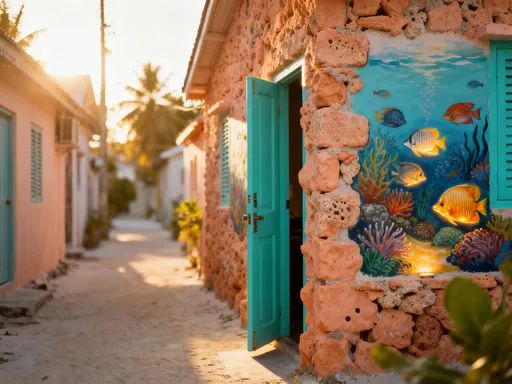
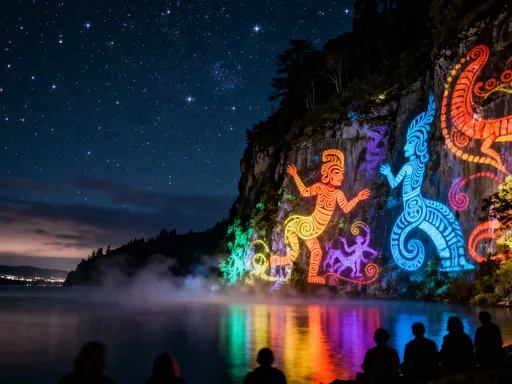
If El Ávila is the city’s lungs, then its barrios are its voice—and that voice roars in color. In neighborhoods like Catia, San Agustín, and Petare, entire building facades are transformed into vast murals, each one a story, a protest, a celebration. This is not graffiti as vandalism, but art as testimony. I spent an afternoon walking through Catia with a local community guide, Mariana, who explained how artists use these walls to speak about identity, resilience, and hope. One mural showed a young girl holding a book, her eyes glowing like stars, with the words “El futuro no se pinta, se construye”—The future is not painted, it is built.
What struck me most was not just the scale of the art, but the pride with which residents spoke of it. We stopped at a corner where a muralist named Rafael was adding final touches to a new piece—a vibrant scene of dancers under a crescent moon. He wiped his hands on his paint-stained jeans and welcomed us with a wide smile. “This is our newspaper,” he said. “No one reads the papers here, but everyone sees the walls.” His work, like so much of the street art in Caracas, is community-funded, often created in collaboration with local youth. It’s not about fame—it’s about presence.
Walking through these neighborhoods, I felt a shift in perspective. These are areas often labeled “dangerous” in travel advisories, but what I experienced was warmth, creativity, and strength. Children played in the streets, elders sat on doorsteps sharing stories, and music floated from open windows. The art didn’t hide the struggles—it acknowledged them, then rose above. One mural in San Agustín depicted a phoenix rising from cracked concrete, wings spread across three buildings. It wasn’t just decoration; it was a declaration.
For travelers, visiting these spaces requires respect. Come as a guest, not a spectator. Ask before taking photos, support local guides, and listen more than you speak. The beauty here isn’t just visual—it’s emotional, cultural, deeply human. By the end of the day, I didn’t see Caracas as a city of contrasts between rich and poor, but as a place where creativity blooms even in the most unlikely soil.
Markets Alive with Flavor: A Sensory Detour
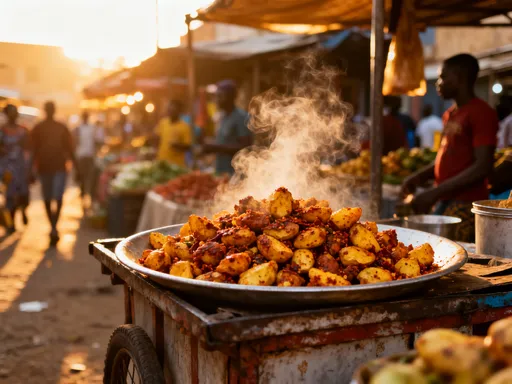
No journey through Caracas is complete without stepping into the heart of its culinary culture—the markets. I made my way to the Mercado Central de Caracas, a sprawling indoor bazaar where the air is thick with the scent of cumin, cilantro, and roasting corn. Stalls overflow with pyramids of red peppers, bundles of fresh herbs, and baskets of yuca, plantains, and guayabas. But the real magic happens at the food counters, where women in crisp aprons press arepas on hot griddles, their hands moving with practiced ease.
I settled at a counter run by Doña Elena, a grandmother with silver-streaked hair and a laugh that could fill the room. She served me a classic arepa reina pepiada—filled with creamy avocado, shredded chicken, and a hint of lime. Next came tequeños, golden sticks of cheese wrapped in dough and fried to perfection, served with a tangy guava dipping sauce. And then, a tall glass of freshly pressed sugarcane juice, sweet and icy, the kind that makes you close your eyes and sigh. Each bite was a connection—to tradition, to family, to the rhythm of daily life.
These markets are more than places to eat or shop. They are social centers, where news is exchanged, friendships are renewed, and culture is preserved. I watched a young couple debate which cheese to buy for their weekend meal, an older man haggle gently over the price of tomatoes, and a group of teenagers sneak a bite of each other’s snacks. Doña Elena told me she’s worked at the market for 38 years. “This is my home,” she said. “My children grew up here, running between the stalls.” Her story wasn’t unique—it echoed in the voices of vendors all around.
For visitors, the market offers an authentic taste of Venezuela beyond the tourist brochures. It’s also a place to support local livelihoods directly. Cash is preferred, and while prices are low by international standards, paying fairly matters. I left with a bag of dried anís for tea, a jar of homemade ají sauce, and the feeling that I’d been welcomed into something real. Food in Caracas isn’t just sustenance—it’s memory, it’s love, it’s resistance.
Music in the Air: Finding Rhythm in the Streets
In Caracas, music isn’t something you turn on—it’s something you step into. It pours from open windows, blares from passing cars, and pulses from small plazas where couples sway to salsa under flickering lights. One evening, I wandered into a quiet square in Los Chaguaramos and found a circle of people dancing—some skilled, others just moving with joy. A man in a striped shirt offered me his hand with a grin. “No steps needed,” he said. “Just feel it.” And so I did.
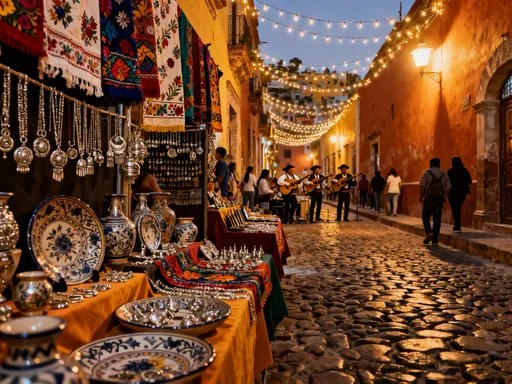
The rhythms of Caracas are as diverse as its people. Salsa reigns in the evenings, its beats sharp and inviting. Reggaeton pulses through headphones and car speakers, especially among younger crowds. And in quieter moments, you might hear the soft strum of a cuatro, the small four-stringed instrument that carries the soul of Venezuelan folk music. I attended a small gathering in a backyard in El Paraíso, where a group of neighbors played traditional joropo music, their feet tapping in perfect time, their voices rising in harmony.
Music here is more than entertainment—it’s a language of connection. During a power outage in my neighborhood, I expected silence. Instead, I heard guitars, laughter, and singing from nearby balconies. People had brought out chairs, lit candles, and turned the blackout into an impromptu concert. In that moment, I understood: when resources are scarce, joy becomes a choice, and music is its loudest expression.
For the traveler, joining this rhythm doesn’t require talent—only openness. Dance in a plaza, tap your foot in a café, hum along to a street performer’s melody. These small acts build bridges. I left Caracas able to hum a few lines of “Alma Llanera,” Venezuela’s unofficial anthem, not because I had studied it, but because it had soaked into me, note by note.
Architectural Contrasts: From Brutalism to Colonial Charm
Walking through Caracas is like flipping through the pages of an unfinished architectural story. In one neighborhood, you’ll find the sleek glass towers of the financial district, reflecting the sky like modern mirrors. A short drive away, the colonial charm of La Candelaria unfolds—narrow streets, colorful houses with wooden balconies, and the quiet elegance of the Santa Rosalía Church. Then there’s Petare, where the massive concrete forms of the Torres de Petare rise like monuments to a different era of urban planning.
Each style tells a piece of the city’s history. The colonial buildings speak of Caracas’ founding in 1567, when it was a small settlement tucked between mountains. The mid-century modernist structures reflect the oil boom of the 1950s and 60s, when Venezuela was one of Latin America’s wealthiest nations. And the sprawling barrios, built over decades by residents themselves, tell a story of resilience and adaptation. I spent a morning in Los Palos Grandes, a leafy neighborhood with tree-lined avenues and elegant homes, then took a bus to Catia, where houses climb steep hills in a patchwork of brick and corrugated metal. The contrast was stark, but not without beauty.
What I found most moving was how people inhabit these spaces. In the barrios, every inch is used—a clothesline strung between houses, a small garden on a rooftop, a child’s drawing taped to a metal door. Architecture here isn’t just about design—it’s about survival, community, and identity. I spoke with a young architect named Andrés who volunteers to help improve housing conditions in informal settlements. “We don’t need grand designs,” he said. “We need dignity, light, and space to breathe.” His words stayed with me.
For travelers, getting lost in these neighborhoods offers deeper insight than any museum or tour. There are no entry fees, no crowds, just life as it’s lived. I learned to walk slowly, to observe, to appreciate the details—a painted door, a hand-carved railing, a mural that turns a blank wall into a canvas of hope. Caracas doesn’t hide its complexities. It wears them proudly.
The Soul of Wandering: Why Caracas Changes You
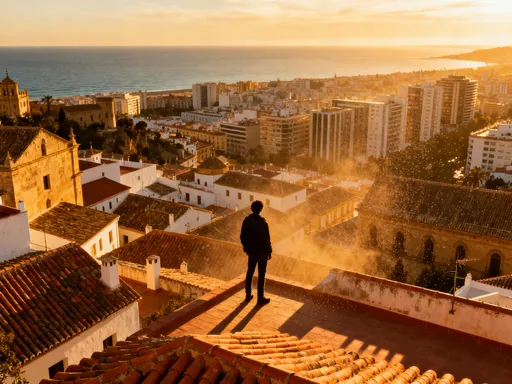
Looking back, it wasn’t the sights that stayed with me—it was the moments in between. The shared laughter with strangers over a spilled drink. The quiet hilltop view at sunset, where the city lights flickered on like stars rising from the earth. The unexpected invitation to a family’s Sunday meal, where I was handed a plate of rice, beans, and fried plantains as if I’d always belonged.
Caracas doesn’t offer easy comfort. It asks you to slow down, to stay open, to embrace discomfort as part of the journey. It challenges the idea that travel must be safe, predictable, or polished. Instead, it offers something rarer: authenticity. Here, you meet people not as roles—vendor, guide, driver—but as individuals with stories, dreams, and humor. You learn that joy can exist alongside hardship, that beauty can grow in broken places, and that connection is possible even when language and culture differ.
This city changes you because it refuses to be reduced to headlines or stereotypes. It is not just a place of struggle, nor is it a paradise. It is both—and more. It is a place where music rises from darkness, where art covers concrete with color, where a simple meal becomes a celebration. To wander in Caracas is to remember what travel can be: not a checklist, but a conversation.
And so, I carry Caracas with me—not as a memory of a place, but as a feeling. The pulse of the streets, the warmth of a shared smile, the rhythm of a city that lives fiercely, beautifully, unapologetically. It reminds me that the world is vast, complex, and full of heart. And sometimes, the most unexpected destinations become the ones that stay with you longest.