Taste of Accra: Where Street Food Dreams Come True
You know that feeling when you land in a new city and your stomach starts calling the shots? Yeah, me too. I thought I knew food—until I hit the streets of Accra. This isn’t just eating; it’s a full-on flavor explosion. From sizzling kelewele to steaming bowls of waakye, every bite tells a story. I never expected Ghana’s capital to be such a culinary powerhouse. Let me take you where the locals eat—no tourist traps, just real, fire-hot dishes that’ll make your taste buds dance.
Arrival in Accra: First Bites, Big Impressions
Stepping off the plane into the warm, humid embrace of Accra’s air, one thing hits you before the sights—the smell. It’s not just one scent but a layered symphony: charcoal smoke curling from roadside grills, the sharp tang of onions frying in oil, the sweet earthiness of ripe plantains caramelizing over open flames. This is not a city that hides its soul; it serves it on a platter, often on a banana leaf or in a reused takeout container. The first meal many visitors stumble upon isn’t in a restaurant but at a low plastic stool by the roadside, where a woman in a bright kente-print apron flips skewers of meat with practiced ease.
For those who expected a quiet West African capital, Accra is a revelation. It pulses with life—honking trotros, bustling markets, children chasing footballs through dusty alleys. And at the center of it all, food. Not as an afterthought, but as the rhythm that drives daily life. There are no white-tablecloth formality rituals here. Instead, specialty dining means sitting shoulder to shoulder with strangers, wiping your hands on a shared towel, and letting the heat of a fresh pepper sauce remind you that you’re alive. This is a city where flavor trumps finesse, and authenticity is measured in smiles, not silverware.
The initial sensory overload can be overwhelming. The noise, the movement, the sheer number of people—it’s easy to feel like an outsider. But then someone hands you a foil-wrapped bundle of grilled fish, fragrant with thyme and chili, and suddenly, you’re part of the scene. That moment—when the first bite floods your mouth with smoky, spicy, savory richness—is when Accra begins to reveal itself. Not through monuments or museums, but through taste. In this city, food isn’t just sustenance; it’s the first language of welcome.
Understanding Accra’s Food Culture: More Than Just a Meal
To understand Accra’s food is to understand Ghana itself. Meals here are never solitary affairs. They are communal, celebratory, and deeply rooted in tradition. Food is how families gather after church on Sundays, how neighbors mark a new baby’s naming ceremony, how friends reconnect after long separations. A shared plate of jollof rice isn’t just dinner—it’s a declaration of togetherness. Every dish carries meaning, every ingredient a history that stretches back through generations.
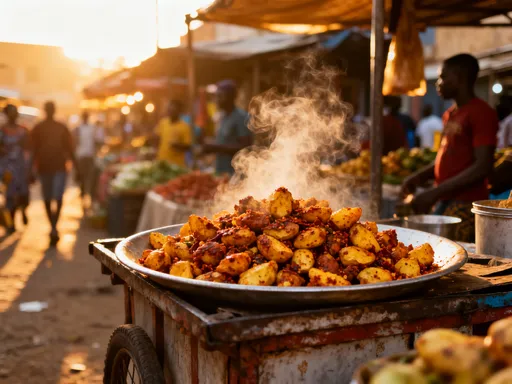
At the heart of Ghanaian cuisine are a few key staples: plantains, cassava, maize, beans, and yams. These aren’t just convenient crops; they are cultural cornerstones. Plantains, for example, appear in nearly every form—fried, boiled, roasted, or mashed—each version tied to a different time of day or occasion. Fried ripe plantains, known as dodo, are a breakfast favorite, their golden sweetness balancing the heat of a morning pepper sauce. Unripe plantains become kelewele when spiced and deep-fried, transforming into a bold, fiery snack sold by women walking the streets with trays balanced on their heads.
Then there’s jollof rice, the undisputed king of West African comfort food. While neighboring countries claim their own versions, Ghanaians proudly defend theirs as the best—tomato-based, smoky from the pot, and often served with fried plantains and a grilled chicken wing. It’s the centerpiece at weddings, parties, and weekend lunches. But more than taste, jollof represents pride, identity, and a healthy dose of regional rivalry. To be invited to a home-cooked jollof meal is to be welcomed into someone’s inner circle.
Other staples like fufu and banku illustrate the diversity within Ghana’s food culture. Fufu, a smooth, dough-like ball made from pounded cassava and plantain, is eaten with soups—often nutty groundnut soup or spicy light soup. It’s not chewed but swallowed in small bites, dipped into the stew. Banku, made from fermented corn and cassava dough, is softer and slightly sour, often paired with grilled fish and hot pepper sauce. These dishes aren’t just about fullness; they’re about connection. Eating fufu requires slowing down, sharing, dipping from the same bowl. It’s food that fosters intimacy.
Street Food Hotspots: Where the Magic Happens
If Accra’s soul has a kitchen, it’s the street. More than 70 percent of daily meals in the city are consumed outside the home, and most of those come from informal vendors. These aren’t random food carts but well-established outposts of culinary excellence, often run by the same family for decades. The city’s rhythm is set by the rise and fall of the grills—quiet in the early morning, roaring by midday, and glowing under lantern light at night.
One of the best places to witness this is Kaneshie Market, a sprawling maze of stalls selling everything from fabric to phone chargers—and, of course, food. At the edges of the market, women squat beside charcoal stoves, stirring large metal pots of waakye. The dish—a mix of rice and beans, often dyed a soft purple with sorghum leaves—is served with hard-boiled eggs, spaghetti, fried plantain, and a fiery pepper sauce. It’s a complete meal in a takeout box, beloved by office workers and market traders alike. The ritual is simple: point, pay a few cedis, sit on a nearby crate, and eat with your hands. No frills, no waitstaff, just flavor.
As evening falls, Oxford Street in the Osu neighborhood comes alive. Once a quiet avenue, it’s now the epicenter of Accra’s night food culture. Strings of lights hang overhead, and the sidewalks fill with pop-up grills. The air is thick with the scent of grilled tilapia, its skin crisp and blackened, brushed with a glossy shito sauce made from smoked fish, peppers, and garlic. Groups of friends gather around low tables, sipping on chilled malt drinks while tearing into fish with their fingers. Music spills from nearby bars, blending with laughter and the clatter of plates.
What makes these spots special isn’t just the food—it’s the trust. Locals know which vendor uses fresh fish, who fries their oil just once a day, and whose shito has just the right kick. These relationships are built over years, not transactions. A first-time visitor might feel lost, but a simple “What’s good?” is usually met with a warm smile and a plate handed over before you even finish asking. This is food as community, served not for profit alone, but for connection.
Must-Try Dishes: A Flavor Journey
To eat in Accra is to embark on a sensory journey, and no trip is complete without tasting its iconic dishes. Each one offers a different window into the city’s spirit—bold, generous, and unapologetically flavorful. Start with kelewele, the street snack that greets you at every corner. These are cubes of ripe plantain, tossed in a mix of ginger, cayenne, and salt, then deep-fried until the outside crackles and the inside melts like warm honey. The first bite delivers a rush of sweetness, quickly followed by a slow, building heat that spreads across your tongue. Best eaten fresh off the grill, still steaming, with a cold bottle of fruit juice to balance the fire.
Next is waakye, the ultimate comfort meal. The name comes from the Hausa word for beans, and the dish is a hearty combination of rice and red beans, cooked together until tender. What makes it extraordinary are the sides: a tangle of spaghetti tossed in tomato sauce, slices of fried plantain, a boiled egg, and a mound of stewed greens. The real star, though, is the pepper sauce—bright red, oil-based, and potent enough to make your eyes water. Eating waakye is an act of indulgence, each bite a mix of textures and temperatures, all held together by the subtle earthiness of the sorghum-dyed grains.
Grilled tilapia with shito is another must. The fish is split down the middle, marinated in spices, and grilled over charcoal until the skin is blistered and smoky. It arrives on a metal tray, often still sizzling, with a generous spoonful of shito on the side. That sauce—dark, glossy, and complex—is the secret weapon. Made from dried fish, peppers, garlic, and oil, it’s fermented for depth and heat. Dip a flake of fish into it, and you’ll taste the ocean, the fire, and a little bit of everything that makes Accra unforgettable.
For breakfast, gari foto is a simple but satisfying choice. It’s made from gari—fermented cassava flakes—mixed with cold milk or water, then topped with sugar and sliced onions. Yes, onions in a sweet dish—this might sound strange, but the sharpness cuts through the sweetness, creating a balance that’s both refreshing and grounding. Served in a bowl with a spoon, it’s a humble meal that fuels early risers across the city.
And finally, puff puff. These golden, doughnut-like balls are deep-fried until puffy and crisp, then dusted with sugar. They’re sold in brown paper bags by schoolgirls at traffic lights and by grandmothers outside churches on Sunday mornings. Sweet, soft, and slightly yeasty, they’re the perfect snack with tea or as a treat for children. One is never enough—there’s always room for a second, especially when the vendor hands you an extra one “for the road.”
From Street to Sophisticated: Accra’s Evolving Dining Scene
While the streets remain the heart of Accra’s food culture, a new wave of dining establishments is redefining what it means to eat well in the city. These are not replacements for street food but complements—spaces where tradition meets innovation, and local flavors are presented with care and creativity. Places like Buka Local and The Noble House have become destinations in their own right, drawing both locals and visitors who want the soul of Ghanaian cuisine with a touch of comfort.
Buka Local, for example, feels like a modern village square. The space is open-air, with wooden benches and walls decorated with traditional textiles and pottery. The menu celebrates regional dishes—snail stew from the Volta Region, kontomire (cocoyam leaf) soup from the Ashanti, and smoked turkey with banku. The ingredients are sourced locally, often from women’s cooperatives, and the presentation is thoughtful without being fussy. A bowl of fufu arrives on a hand-carved wooden platter, the soup rich and aromatic, the fufu perfectly smooth. It’s street food elevated, not altered.
The Noble House takes a different approach, blending Ghanaian flavors with global techniques. Here, you might find jollof risotto—yes, risotto made with the smoky, tomato-rich base of jollof rice, slowly stirred to creamy perfection. Or grilled plantain tacos with shredded chicken and pineapple salsa. These dishes don’t replace tradition; they reinterpret it, making it accessible to younger generations and international palates. The ambiance is stylish but relaxed, with soft lighting and Afro-jazz playing in the background. It’s the kind of place where a business lunch feels like a celebration.
Behind this evolution are a new generation of Ghanaian chefs—many trained abroad, now returning to honor their roots. They’re not chasing Michelin stars; they’re reclaiming narratives. For too long, African cuisine was seen as rustic or unsophisticated. Now, these chefs are proving that local ingredients, when treated with respect, can shine on any plate. They’re hosting pop-up dinners, writing cookbooks, and mentoring young cooks. Their mission is clear: to show the world that Ghanaian food is not just delicious—it’s dynamic, diverse, and deserving of global attention.
Navigating the Scene: Practical Tips for Food Travelers
For all its excitement, eating in Accra requires some smart choices. The good news? With a few simple precautions, you can enjoy the full range of flavors without worry. First, prioritize cleanliness. Look for vendors with a steady stream of customers—high turnover means fresh food. Watch how they handle money and food; the best ones use separate hands or tongs. If a grill looks greasy or a pot is uncovered, it’s okay to walk on.
Carry small bills. Most street food costs between 5 and 15 cedis (less than $2), and change can be hard to come by. Also, bring your own hand sanitizer and wet wipes. While many vendors offer water for washing, having your own supplies adds an extra layer of comfort. And don’t skip the hand rinse—it’s part of the ritual, and skipping it might mark you as a tourist who doesn’t know the ways.
Timing matters. Markets like Kaneshie and Makola are busiest in the morning and late afternoon, so go early for the freshest waakye or midday for grilled fish. Night markets, like those on Oxford Street or at the Car Park, come alive after 7 p.m., when the heat of the day fades and the grills light up. Weekends are especially vibrant, with live music and larger crowds.
Transportation is easy. Tro-tros—colorful minibuses—are the most common way locals get around. Just say your destination to the driver, pay a small fare, and hop in. They’ll drop you within walking distance of most food hubs. For more comfort, ride-hailing apps like Uber and Bolt are widely available and affordable. Both are safe and reliable, especially at night.
And finally, engage with kindness. A smile, a “good morning,” or a simple “thank you” goes a long way. If you don’t know the name of a dish, point and ask, “What’s this?” Most vendors are happy to explain, and you might even pick up a few words of Twi or pidgin. This isn’t just about food—it’s about respect. When you eat in Accra, you’re not just a customer. You’re a guest.
Why Accra’s Food Stays With You
Long after you’ve left Accra, the flavors linger. Not just in memory, but in your body. You’ll catch a whiff of smoked fish in a city market halfway around the world and suddenly be back on Oxford Street, laughing with strangers over a shared platter of tilapia. You’ll bite into a ripe plantain and feel the heat of that first kelewele, the way it surprised you with its boldness. This is the power of Accra’s food—it doesn’t just feed you. It changes you.
What stays with you isn’t just the taste, but the warmth. The woman who handed you an extra puff puff because you looked tired. The man who explained how to eat fufu without making a mess. The children who giggled when you tried to say “shito” without spitting. These moments, woven into every meal, transform eating into something deeper. They remind you that food is not just fuel, but a bridge between people.
In a world that often feels divided, Accra offers a different model. Here, a shared plate can erase differences. A bowl of waakye can make you family. The city doesn’t ask you to be rich, famous, or perfect. It just asks you to sit down, open your mouth, and let the food speak. And when it does, it says: Welcome. You belong.
Specialty dining in Accra isn’t about luxury. It’s about truth. It’s about fire, joy, and the courage to taste life fully. So go. Not to check a box, but to feed your soul. Let the streets guide you. Let the flavors surprise you. And when you return home, you won’t just carry stories. You’ll carry a piece of Accra—with every bite, a reminder that the world is richer when we eat together.